A Beginner’s Guide to Glowing Skin Without the Irritation
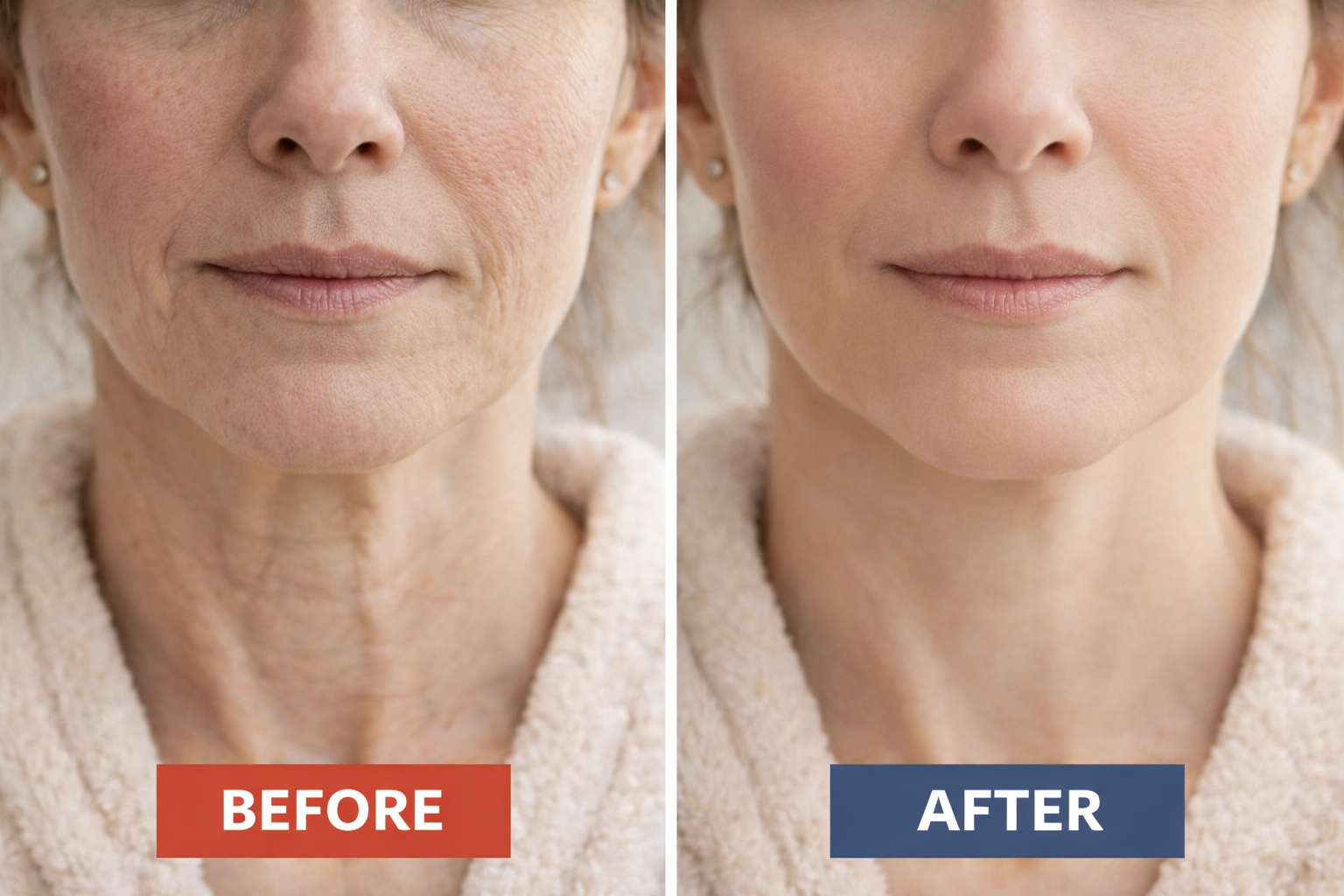
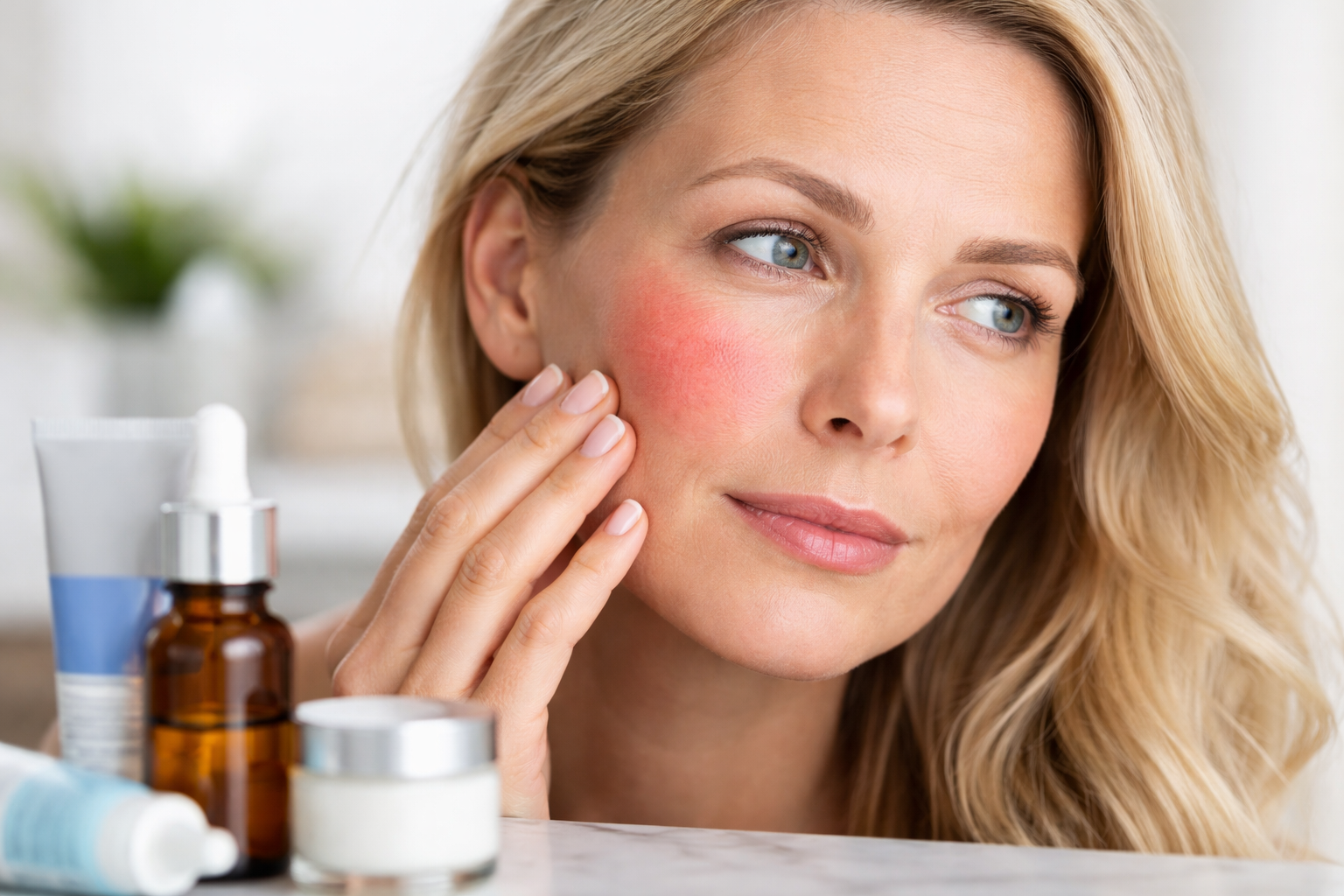
Retinol is often called the gold standard of anti-aging. It smooths fine lines, boosts collagen, and improves skin texture. But after 40, many women start using retinol with high hopes — only to stop a few days later because of redness, peeling, burning, or tight, uncomfortable skin.
If this sounds familiar, you’re not alone.
The problem usually isn’t retinol itself.
It’s how our skin changes after 40 — and how we introduce this powerful ingredient.
The good news? You don’t have to give up on retinol. You just need a smarter strategy.
Here’s exactly why redness happens — and how to prevent it.
1. Why Skin Becomes More Sensitive After 40
In your 20s and 30s, your skin barrier is typically stronger and more resilient. After 40, several biological shifts occur:
Weakened Barrier Function
The skin’s protective barrier becomes thinner and less efficient. This means active ingredients penetrate faster and deeper — sometimes too aggressively.
Reduced Lipids and Ceramides
Natural oils and ceramides decrease with age. Without enough lipids, skin loses moisture more easily and becomes reactive.
Slower Cell Recovery
Skin regeneration slows down. When irritation occurs, it takes longer to calm down.
This combination makes retinol feel harsher — even if you’re using the same formula you once tolerated.
2. The Most Common Reasons Retinol Causes Redness
If you’re experiencing what people call “retinol burn,” one (or more) of these mistakes is usually responsible.
1. Starting Too Strong
Jumping straight to 1% retinol after 40 is often too aggressive. High-strength formulas increase the risk of inflammation and barrier damage.
2. Using It Too Frequently
Applying retinol every night from day one doesn’t give your skin time to adapt.
3. Skipping Moisturizer
Retinol increases cell turnover — which can disrupt the barrier if hydration isn’t layered properly.
4. Mixing with Exfoliating Acids
Using AHAs, BHAs, or strong vitamin C in the same routine creates unnecessary irritation overload.
Redness is usually not a “bad reaction.”
It’s a signal your skin needs a slower introduction.
3. How to Prevent Irritation: The “Slow & Low” Method
After 40, retinol success is not about strength.
It’s about control.
Follow these three rules.
Start Low (0.1%–0.3%)
For most beginners over 40, 0.3% is the sweet spot.
It delivers visible smoothing while keeping irritation manageable.
If your skin is very sensitive, start at 0.1% first.
Use the “Moisturizer Sandwich”
This technique reduces irritation significantly:
- Apply a thin layer of moisturizer
- Apply a pea-sized amount of retinol
- Finish with another layer of moisturizer
This buffers absorption and protects your barrier.
Limit Frequency
Week 1–2: 2 times per week
Week 3–4: Every other night
Month 2+: Increase slowly if tolerated
And always use SPF during the day. Retinol increases sun sensitivity.
4. Best Beginner-Friendly Retinol Options
Choosing the right formula matters.
If redness is your concern, look for:
• Encapsulated retinol (slow release technology)
• Added ceramides
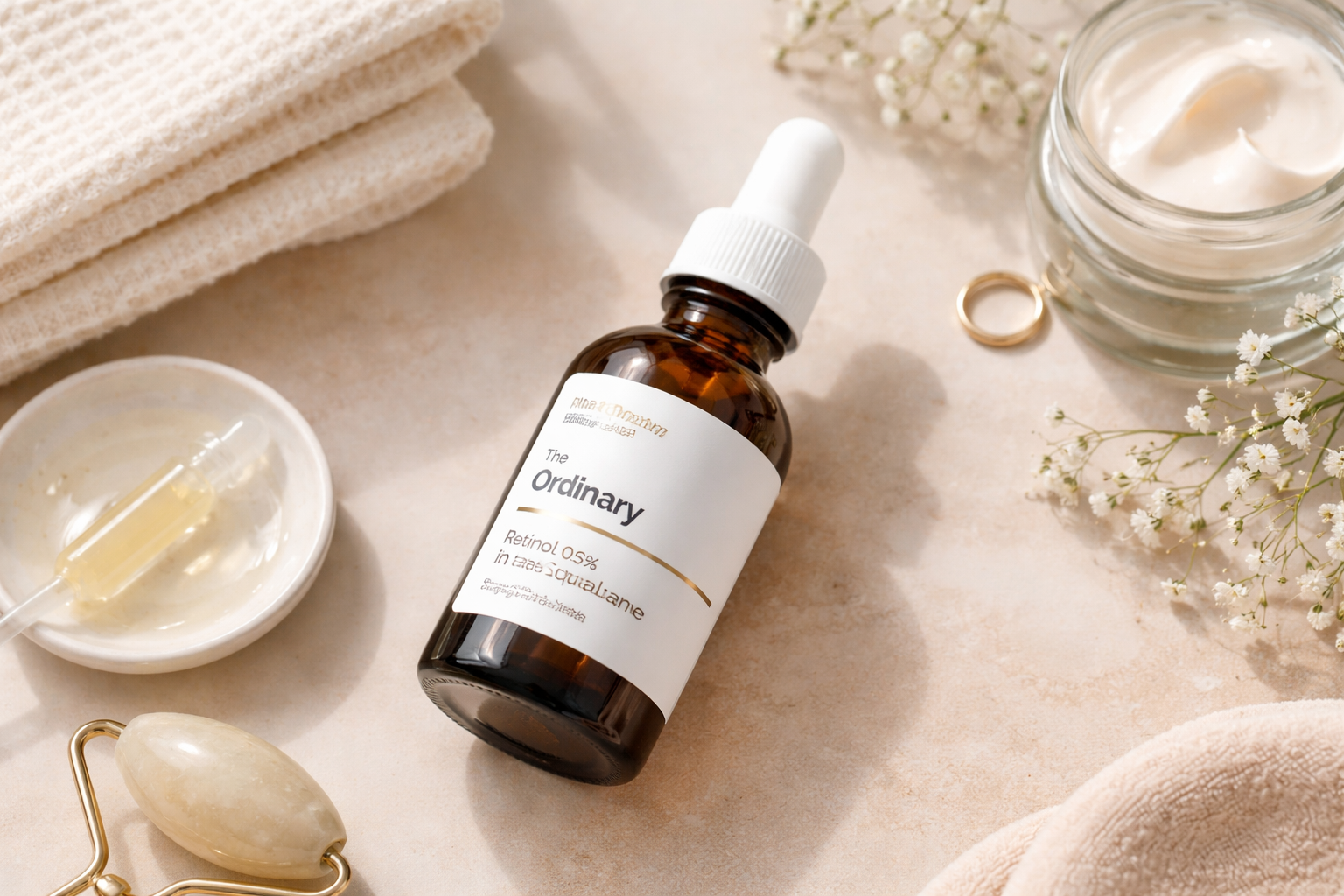
• Squalane-based formulas
• Fragrance-free products
For dry or reactive skin, oil-based or barrier-supporting formulas are often more forgiving.
👉 Check beginner-friendly retinol options here

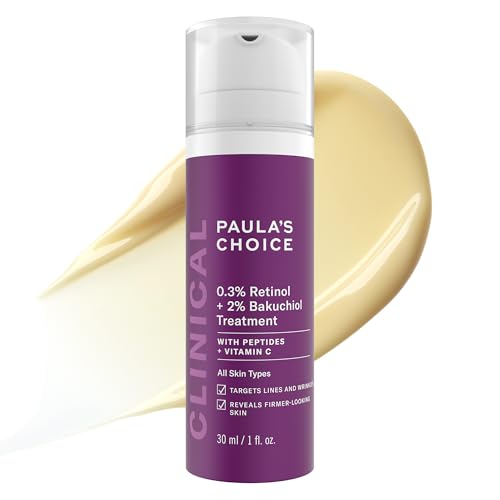
If you want a formula that bridges “gentle” and “effective,” this serum is a strong mid-strength choice.
Featuring 0.3% retinol plus 2% bakuchiol, it supports anti-aging results while soothing irritation — a smart option for aging, sensitive skin.
If you’re ready for slightly stronger results but still want balance:
👉 View mid-strength 0.3–0.5% options here

- [ RETINOL FOR FACE ] This anti aging serum leverages encapsulated retinol with MVE Technology to ensure efficient delive…
- [ WRINKLE SERUM ] Face serum formulated with retinol to refine texture and diminish fine lines. Wrinkle remover for face…
- [ GENTLE ON SKIN ] Apply this fragrance-free, non-comedogenic retinol serum in the evening, building up to daily use to …

The key is matching strength to tolerance — not ego.
5. When You Should Pause Retinol
Retinol is powerful, but it’s not for every situation.
Avoid or pause use if you have:
• Active rosacea flare-ups
• Broken or compromised skin
• Recent chemical peels or laser treatments
Focus on repairing your barrier first. Retinol can always be reintroduced later.
Final Advice: Glow Comes from Patience
In your 40s, skincare is less about speed — and more about strategy.
Retinol can absolutely transform mature skin. It can soften lines, improve texture, and boost firmness. But forcing your skin to adapt too quickly will only backfire.
If redness appears, pause for a few days. Hydrate. Reintroduce slowly.
Consistency beats intensity.
Your future, glowing self will thank you.